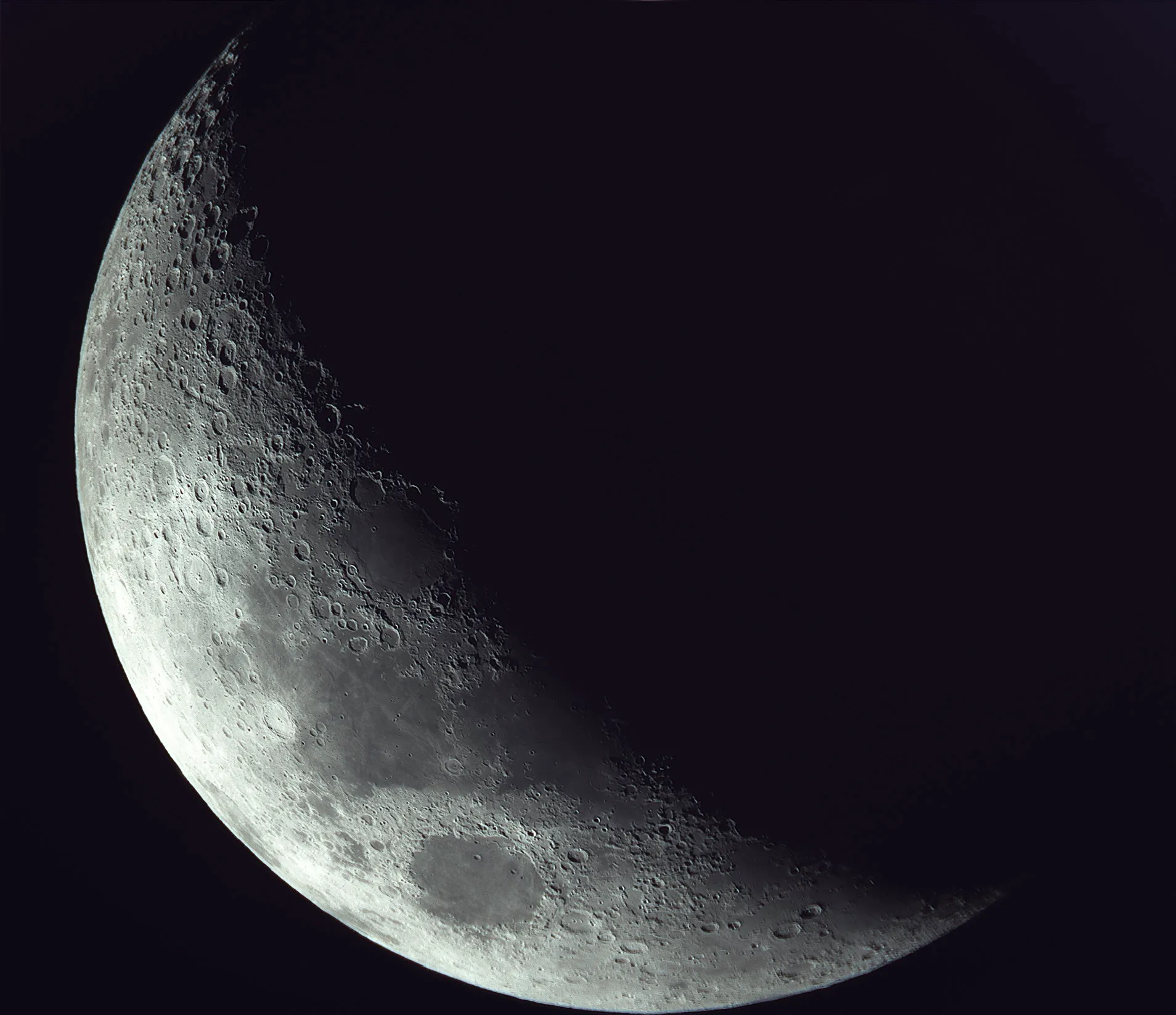
Optics and acquisition
Astrophotography
I enjoy astrophotography as much for the process as for the finished image. Each target involves setting up and tuning the optics, mount, camera, guiding, and acquisition software, then calibrating and stacking many hours of data to improve SNR before processing the image. Small errors add up, which is as frustrating as it is rewarding when the final image comes together.
Featured observation
Solar H-alpha: partial eclipse
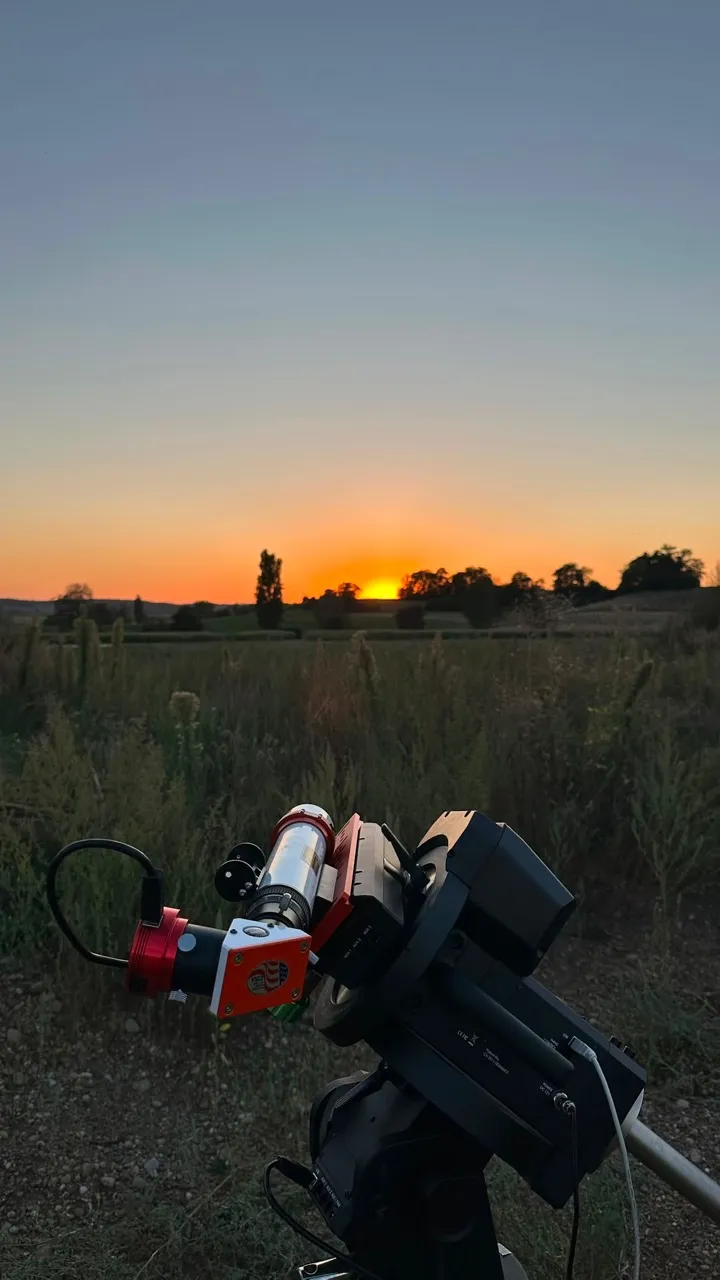
Notes from the 12 August 2026 partial solar eclipse, captured in H-alpha with a dedicated solar telescope.
H-alpha isolates the chromosphere, so etalon tuning matters: disc texture, limb structure, and prominences trade contrast as the bandpass shifts.
Technical log
- 12 August 2026, Switzerland
- Lunt 40 H-alpha solar telescope
- ZWO ASI120MC camera
- Etalon tuned for disc, limb, and prominence contrast
Solar imaging requires a certified, purpose-built optical path from aperture to sensor.
Eclipse video
Watch the partial eclipse observation
YouTubeGallery
Selected targets
Lunar and planetary images, narrowband emission nebulae, broadband galaxies, and wide-field targets.
Current imaging train
Imaging setup
Optics
12" Meade SCT with a Starizona IV reducer/flattener, ZWO filter wheel, and Optolong L-eXtreme for H-alpha/OIII emission targets.
Mount and Guiding
Sky-Watcher EQ8-R with a ZWO off-axis guider and ASI120M guide camera for long integrations.
Sensor
ZWO ASI2600MC cooled APS-C color CMOS camera, with exposure plans set by target brightness, sky conditions, and SNR.
Focus and Control
Pegasus Prodigy electronic focuser, regular focus checks, and calibration with darks, flats, and bias or dark-flat frames.
Related engineering work
My computer-vision and scientific-imaging projects deal with many of the same concerns: acquisition, calibration, signal quality, and making processing steps inspectable. My bachelor thesis on astronomical image processing covers calibration, registration, stacking, and processing in a configurable desktop application.